

An extract from Chapter 6 of Permission Granted: A Call-to-Action Playbook for Women Entrepreneurs by Professor Maura McAdam.
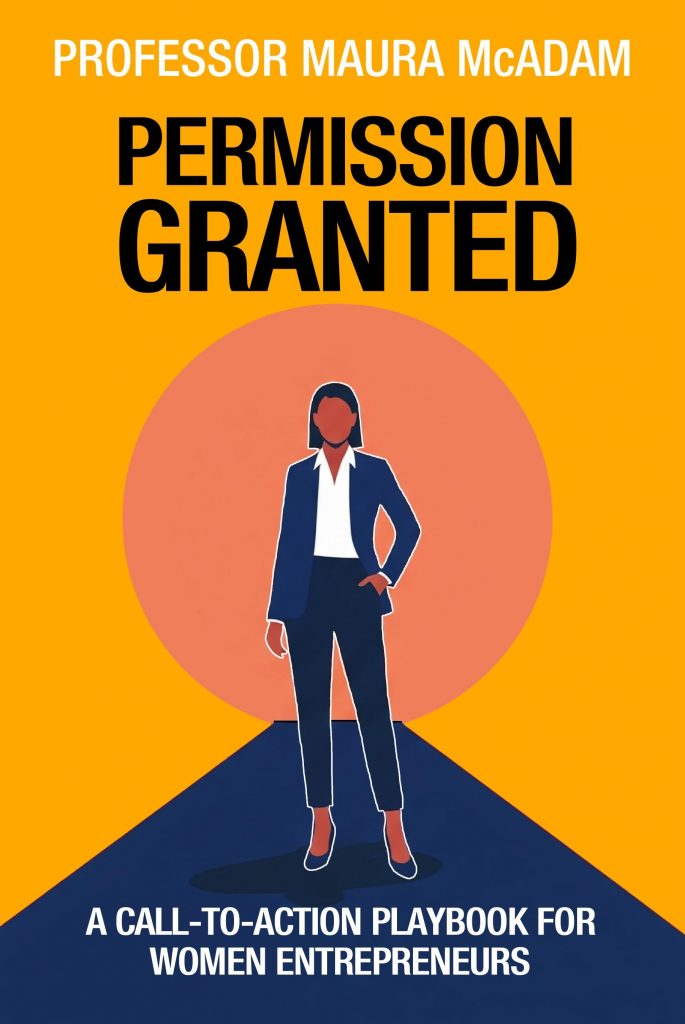
Published March 2026
Maura McAdam, PhD, is a professor, researcher, coach, and accredited NLP Master Practitioner. For over two decades, she has translated her globally recognised research on entrepreneurship and leadership into practical guidance for real-world use.
Consistently recognised among the top 2% of scientists worldwide for research impact, Maura is a leading voice in women’s entrepreneurship. In this, her first book for a wider audience, she blends evidence-based insight with real-world experience to offer practical, transformative strategies.
* * * * *
Chapter 6: The Financial Compass
Introduction
Getting the right type of funding can be tough for any business owner, regardless of gender. However, research and real-life experiences show that women frequently face additional challenges, especially when it comes to venture capital.
Basically, women are less likely to receive private investment. This often comes down to bias and outdated assumptions that investors may not even realise that they have, which can make it harder for women to raise money for their businesses.
As a woman entrepreneur, finding the right type of funding is a key part of starting and growing your business. This chapter is here to act as your financial compass and guide you through the different types of funding that entrepreneurs typically use. It also highlights some common barriers women face and offers practical, evidence-based tools and exercises to help you confidently navigate the business financing landscape.
Access to the Money
It’s widely acknowledged that women entrepreneurs often face more challenges when raising money for their businesses than men. First, women might struggle to raise startup capital. Second, they may have trouble providing guarantees because of limited personal assets and credit history. Third, they may find it hard to access informal financial networks to support their businesses’ growth. Lastly, they may face issues related to gender stereotyping and discrimination.
These stereotypes can create barriers to securing finance, as they reinforce negative assumptions about women’s relationships with entrepreneurship and money (see Chapter 2). For example, regardless of whether a woman entrepreneur seeks funding from a bank, a finance agency, a friend, a relative, or even her spouse, she might encounter the stereotype that ‘women can’t handle money’. This bias isn’t too surprising considering that in France, married women couldn’t open a credit account without their husband’s consent until 1965[i] and in the US, the Equal Credit Opportunity Act wasn’t passed until 1975.
When it comes to funding their ventures (consciously or unconsciously), entrepreneurs typically follow a specific order of preference, explained by Myer’s Pecking Order of Capital Structure Theory.62F[ii] Studies show that business owners, regardless of gender, prefer to use personal savings and contributions from family and friends first – affectionately known as the 3Fs – family, friends and fools(!) followed by bank loans. Once these financial options have been suitably tapped, entrepreneurs then typically turn to Venture Capitalists and Business Angels (equity funding).
Women use different strategies to start and build their businesses, and that’s ok. What is more important is getting the right amount and type of capital (startup or growth capital) for you and your venture to survive, grow, and scale.
Types of Funding – Getting the Right Funding for You and Your Venture
Bootstrapping
In entrepreneurship, bootstrapping refers to building and growing a business without relying on outside investment, such as venture capital or large loans. Instead, the entrepreneur funds the business through personal savings, reinvested profits, and careful financial management. For many women entrepreneurs, bootstrapping is not only a strategic choice but sometimes a necessity due to systemic barriers in accessing funding. Many women also rely on bootstrapping as a way to maintain control over their vision while navigating an ecosystem that often underestimates or overlooks them.
Bootstrapping can empower women to build on their own terms by preserving ownership, decision-making authority, and independence.
For women who may face additional responsibilities, such as caregiving or managing work-life balance, bootstrapping can also allow for greater flexibility and creative approaches to business models. Despite the challenges (including slower scaling and increased financial pressure), many women-led businesses that bootstrap become highly successful, values-driven, and deeply connected to their customer base. Bootstrapping often encourages a hands-on understanding of every aspect of the business and cultivates a sense of ownership that builds confidence and credibility. With the rise of digital tools, online marketplaces, and community-based support networks, bootstrapping has become more accessible than ever, enabling women from diverse backgrounds to launch impactful ventures without waiting for external validation.
* * * * *
Continues on page 120 of Permission Granted, detailing:
Banks
Tips for Securing Bank Loans
Venture Capital
Tips for Securing Venture Capital
Business Angels
How to get a Business Angel Onboard
Pitching
Strategies for Countering Bias
What Happens When Women Fund Women?
[i] Richomme-Huet 1, K. and Vial 2, V., (2017). The mampreneur movement in France: liberal or radical feminist phenomenon? Entrepreneurship Review, 16(2), pp.123-149.
[ii] Myers, S.C. and Majluf, N.S., (1984). Corporate financing and investment decisions when firms have information that investors do not have. Journal of Financial Economics, 13(2), pp.187-221.